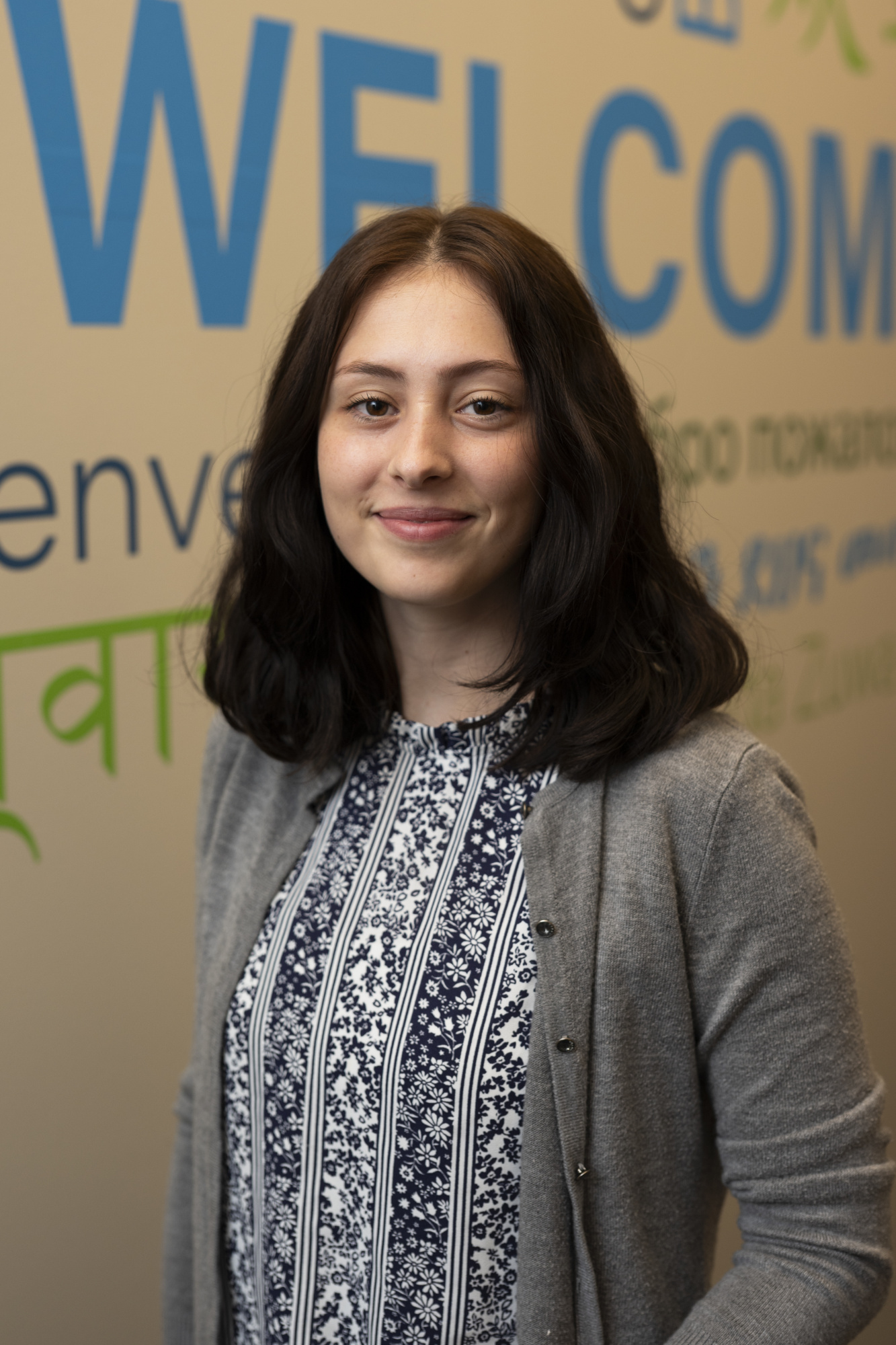
Tabatha didn’t always know exactly where her path would lead—but looking back, it makes sense that she found her way to working closely with children and families.
Originally from Hermitage, she came to Pittsburgh for college at Carlow University and never left. Growing up in a more suburban environment, she found herself drawn to the energy and opportunities of the city.
Her early experiences pointed her toward working with children. She babysat in high school, spent time with younger cousins, and grew up alongside two brothers, always wanting to keep up with them.
Finding Her Fit
While studying early childhood development and learning at Carlow, Tabatha initially considered elementary education. But after spending time in different classrooms, something didn’t click.
“I tried every grade and just didn’t feel a fit,” she said.
Instead, she found herself drawn to the broader context of child development including family dynamics, psychology, and support systems. She took courses in parenting, child abuse, counseling, and psychology, building a foundation that would help shape her career.
At the same time, she worked in childcare for four years. By her junior year, she had already stepped into a leadership role as the lead teacher in an infant room, caring for 12 babies with just two other staff members. It was intense, but deeply rewarding.
“You’d see them come in and just lay there, and by the time they left, they were walking, using words, even baby sign language,” she said. “It was so fast-paced and exhausting, but you didn’t feel it.”
A Shift Toward Family Support
After graduating, Tabatha joined TEIS Early Intervention, where she began working directly with families and young children in their homes. The shift from classroom to community opened her eyes.
“In the classroom, you’re thinking about more than just the kids- you have the school and other teachers,” she explained. “With early intervention, you’re able to focus more on the child and the family.”
Through that work, she met families navigating language barriers, resettlement challenges, and complex needs beyond child development. She found herself wanting to do more.
“I’d be there for the child, but I could hear everything else the family needed,” she said.
So, when she heard about SHIM, and the organization’s reputation for supporting families holistically, it felt like the right fit.
Building Relationships at SHIM
Now working at SHIM’s Family Center, Tabatha supports a small caseload of families, helping them access services, navigate systems, and support their children’s development.
Much of her work involves families who are newer to the United States, often facing language barriers and isolation. She frequently brings interpreters to visits, helping families tackle everything from reading mail to scheduling appointments.
“I imagine how difficult it would be to be in a country where you don’t speak the language,” she said. “Being able to help with that feels really meaningful.”
Her role is as much about connection as it is about services. For many parents, especially new mothers, her visits provide a rare opportunity to talk, ask questions, and feel supported.
Supporting Early Development
A key part of Tabatha’s work is tracking children’s development using tools like the Ages and Stages Questionnaire (ASQ). Every six months, she helps families assess milestones, from communication and motor skills to problem-solving and social development.
But the goal isn’t just evaluation; it’s early support. If a child shows signs of delay, families can connect with early intervention services right away. If skills are emerging but not yet strong, Tabatha provides activities and guidance to help build them.
“The program gives families immediate feedback,” she explained. “Not years later when something becomes a bigger concern.”
She’s seen firsthand how impactful that can be, watching children grow, gain skills, and build confidence over time.
The Power of Home Visiting
Home visiting is at the heart of Tabatha’s work, making support accessible for families who may struggle with transportation, scheduling, or childcare.
It also creates space for deeper relationships. Over time, she gets to know families well, celebrating milestones, noticing subtle progress, and supporting parents through challenges. One recent moment stood out: after months of bringing duplicate toys to prevent sibling conflict, she witnessed a child’s unprompted sharing.
“It was such a small thing, but it showed so much growth,” she said.
Hello Baby and New Beginnings
Tabatha also works with Allegheny County’s Hello Baby program, which supports families during a child’s first year of life. Through regular check-ins and “cheer boxes” filled with essentials, the program helps families navigate early parenthood.
The needs are often basic- like diapers, formula, and food- but the impact is significant.
“I feel like a lot of the needs right now are basic needs,” she said, noting how delays in SNAP benefits have made support even more critical.
Meeting Families Where They Are
One of the most important lessons Tabatha has learned is that every family is different.
Some have strong support networks; others experience deep isolation. Some eagerly access resources; others hesitate, unsure if they “need” help or worry about taking resources from others.
“There can be stigma, or just not wanting to take more than they think they should,” she said.
Her approach is simple- meet families where they are, build trust, and offer support without judgment.
Why the Work Matters
For Tabatha, the most rewarding part of her job is simple: seeing growth.
Whether it’s a child reaching a milestone, a parent gaining confidence, or a family finding stability, those moments add up. She’s seen parents return to work, families build routines, and children thrive with the right support.
“It’s really nice to be able to have a bigger impact,” she said.
And for many families, SHIM becomes more than just a resource- it becomes a trusted partner.